Rubbish clearance for Abbeville Road shops and cafes Clapham
Posted on 15/07/2026
Running a shop or cafe on Abbeville Road means dealing with more than customers, coffee, stock and opening hours. There is also the steady build-up of packaging, broken fixtures, food-related waste, old furniture, display materials and the occasional "where did all this come from?" pile in the back room. That is exactly where Rubbish clearance for Abbeville Road shops and cafes Clapham becomes useful: it keeps your premises tidy, safer to work in, and easier to manage when space is tight and time is even tighter.
This guide explains how local rubbish clearance works for commercial premises, what to expect, which waste streams need extra care, and how to choose the right approach without disrupting service. If you are planning a refit, clearing stock, moving units, or simply trying to stop the rear yard from becoming a dumping ground, you are in the right place. Let's keep it practical.
Why Rubbish clearance for Abbeville Road shops and cafes Clapham Matters
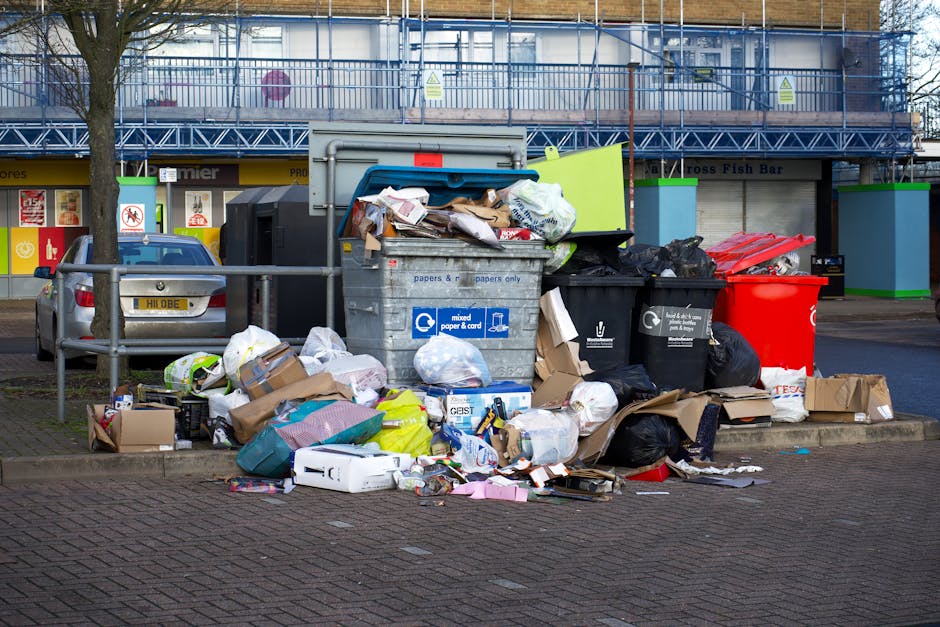
Abbeville Road has a very particular rhythm. It is busy without feeling anonymous, local without feeling sleepy, and that means rubbish can become noticeable very quickly. A couple of cardboard towers, a damaged chair left by the back gate, or a bag of mixed waste waiting for "later" can change the look and feel of a business almost overnight.
For shops and cafes, clearance is not just about making things look neat. It affects how staff move around, how stock is stored, how customers experience the frontage, and even how easily deliveries can be received. In a small hospitality or retail unit, one awkward pile can slow everything down. One wet cardboard box can become a slip risk. One overflowing bin area can become a smell issue by mid-afternoon. Not ideal, to say the least.
There is also the local image to think about. A clean, well-kept frontage quietly tells customers that a business is organised and cared for. That matters on a street like Abbeville Road, where people often notice the little things: a tidy pavement, a clear doorway, a fresh-looking shop window. Small details, big impression.
If your business is also linked to office space, storage rooms or mixed-use premises, it can help to understand the broader picture too. Our services overview gives a good sense of how different clearance needs fit together, while the local context in Clapham: a local's living experience shows why keeping commercial spaces functional matters so much in this part of London.
How Rubbish clearance for Abbeville Road shops and cafes Clapham Works
In simple terms, commercial rubbish clearance is the organised removal of unwanted items from your premises, usually with loading, sorting and disposal handled for you. The exact process depends on what you need removed. A cafe clearing old seating and broken kitchen equipment is very different from a boutique removing packaging, shelving and out-of-date display fixtures. The good news is that the process can usually be made pretty straightforward.
Most jobs begin with a quick assessment of what needs going. This can be a short description, a photo-based estimate, or a site visit if the load is more complex. Once the waste is understood, the team can decide what vehicle, lifting help and disposal route are needed. That sounds slightly formal, but in practice it just means fewer surprises on the day.
On collection day, items are removed from the agreed area, whether that is the shop floor, cellar, rear yard, stockroom or alley access point. Where needed, the waste is separated into reusable, recyclable and non-recyclable streams. That is particularly useful for businesses trying to reduce what goes straight to landfill or general disposal. Our recycling and sustainability page explains the mindset behind that approach in plain English.
For many local businesses, timing matters as much as the removal itself. Early morning before opening, after closing, or between delivery slots can make the process far smoother. If you are near the station end of town and need to move quickly, the article on same-day rubbish collection near Clapham Junction gives a good feel for how rapid clearances can be handled in a busy London setting.
Key Benefits and Practical Advantages
A properly managed clearance does more than remove clutter. It removes friction from the day-to-day running of a business. And honestly, friction is the thing that quietly drains time.
- Safer staff movement: Fewer obstructions in narrow back-of-house areas, stockrooms and access routes.
- Better customer presentation: A cleaner frontage and less visible overflow around the premises.
- More usable space: Stock, display and prep areas work better when they are not full of old packaging and broken items.
- Faster turnaround during change: Fit-outs, refurbishments and stock resets become less stressful.
- Cleaner waste handling: Waste can be separated more sensibly, especially where recycling is possible.
- Reduced disruption: A planned clearance is usually quicker than a piecemeal clean-up spread over several days.
There is also a subtle operational benefit that people sometimes miss: clearer space helps staff think more clearly. That sounds almost too simple, but it is true. When the back room stops feeling like a storage shed and starts looking like part of the business again, people tend to work more smoothly. You will notice it in the pace of the day.
For businesses with a small office above or behind the shop, it may be worth comparing commercial rubbish clearance with a more focused workplace clear-out. In some cases, office clearance in Clapham is the better fit, especially if desks, filing, chairs or IT equipment are involved.
Who This Is For and When It Makes Sense
This kind of clearance is useful for a wide range of businesses along and around Abbeville Road. Not just one type of venue, not by a long shot.
It is a strong fit for:
- independent cafes clearing broken seating, packaging or kitchen overflow
- shops replacing fixtures, shelves or display units
- new tenants taking over a unit and needing a clean start
- business owners preparing for refurbishment or a rebrand
- managers dealing with end-of-line stock, damaged packaging or mixed store waste
- landlords or property managers between occupiers
It also makes sense when rubbish has simply outgrown normal bin collection. That is common in hospitality, where cardboard, broken crates, packaging wrap and the occasional unwanted item all arrive at once. If you have ever looked at a back yard after a busy weekend and thought, "right, we need a proper clear-out," you are not alone.
Some jobs are more urgent than others. For example, a cafe facing an inspection-ready tidy-up, or a retailer preparing for a busy seasonal window, often needs a quick response. In those cases, clearance is not a nice-to-have. It is part of staying open smoothly.
For businesses in the wider area, the local context matters too. Articles like discovering Clapham beyond central London and the SW4 rubbish removal guide show how different parts of Clapham have different access patterns, which can affect timing and collection planning.
Step-by-Step Guidance
If you want the process to run calmly, it helps to treat clearance like a small project rather than a last-minute scramble. Here is the basic flow.
- Identify the waste types. Separate cardboard, general waste, furniture, broken fixtures, food-related items and anything that may need special handling.
- Decide what must go now. Be ruthless, in the useful sense. If it is blocking movement or unlikely to be used again, it probably needs to leave.
- Check access. Think about stairs, tight entrances, rear lanes, loading times and whether parking or vehicle access could be awkward.
- Choose a convenient time. Early mornings, quiet trading windows and after-hours slots usually cause the least disruption.
- Prepare the area. Put aside anything to keep, label reusable stock and make sure fragile items are separated.
- Review the disposal approach. Mixed waste, recyclable materials and bulky items should not all be treated the same.
- Complete the clearance and final sweep. A short final check usually catches stray packaging, fixings and dust bunnies hiding in the corner. They always hide in the corner, don't they?
If you are handling an entire unit rather than a few bags, a broader service may help. For larger loads or premises that are being emptied fully, waste removal in Clapham can be a more suitable route than ad hoc trips to the bin area.
One practical tip: if your shop or cafe receives deliveries at predictable times, plan the clearance around them. It sounds obvious, but it is one of the easiest ways to avoid forklifts, trolleys, customers and clearance teams all trying to occupy the same two square metres. Chaos avoided.
Expert Tips for Better Results
Good clearance is mostly about preparation and judgement. A little planning goes a long way.
1. Group items before collection day. Even a rough grouping helps: metal with metal, cardboard with cardboard, furniture apart from loose rubbish. This reduces delays and makes recycling easier.
2. Photograph awkward items early. If something is unusually large, fragile or heavy, a photo can make quoting and planning much more accurate. It also helps avoid that classic moment where everyone stands around the item saying, "I thought it was smaller."
3. Keep a list of what must stay. In a busy shop or cafe, people often worry more about not losing the important things than about the rubbish itself. A simple keep list removes that stress.
4. Protect high-traffic areas. Put down coverings where needed, especially if rubbish has to pass through customer-facing space. A clean hallway is easier to preserve than to clean again after the fact.
5. Ask about recycling routes. Cardboard, metals and some fixtures may be suitable for separate handling. The less mixed waste, the better the outcome usually is.
6. Schedule around trading peaks. This one matters more than people think. A clearance at 8 a.m. can feel invisible. A clearance at 12:30 p.m. on a busy Friday? Less so.
In our experience, the calmest jobs are the ones where the business owner has already decided what success looks like. Not perfection. Just a clean, usable space by the end of the day.
Common Mistakes to Avoid
Most clearance problems are not dramatic. They are just messy little oversights that add up. Here are the big ones to watch for.
- Leaving the sort-out until collection day: This slows everything down and increases the chance of items being mishandled.
- Mixing waste types too freely: Cardboard, food waste, fixtures and general rubbish should not all be thrown together if you can avoid it.
- Ignoring access restrictions: Narrow entrances, basement stairs and shared yards can make a straightforward job complicated.
- Forgetting what needs to stay open: Staff toilets, emergency exits and customer routes should never be blocked, even temporarily.
- Assuming every item can go in the same load: Some materials need more careful handling than others. Better to check first.
- Choosing speed without planning: Fast is useful, but random is not. A quick service still works best when the basics are clear.
There is a small but important point here: many business owners think the main challenge is the physical lifting. Often it is actually the sorting and timing. The lifting is the easy part. The thinking part is where the real value lies.
Tools, Resources and Recommendations
You do not need a warehouse full of equipment to prepare for rubbish clearance, but a few simple tools make life easier.
- Heavy-duty bags or boxes: Useful for smaller mixed waste and loose packaging.
- Marker pens and labels: Handy for separating keep, donate, recycle and remove piles.
- Basic gloves: Good for staff sorting items before collection.
- Tape and string: Useful for securing loose parts from dismantled fixtures.
- Phone photos: Probably the quickest way to document what needs clearing.
From a service perspective, it helps to use a provider that explains pricing clearly and shows how different jobs are assessed. If you want a sense of how quotes are usually handled, the pricing and quotes page is a useful starting point.
You may also want to understand the provider's approach to safety and responsibility. That matters with commercial waste, especially where lifting, sharp edges or awkward access is involved. A well-run clearance should feel orderly, not rushed. If the process looks improvised, that is worth questioning.
For businesses considering a bigger refresh, related services can help you avoid piecemeal management. For example, if you are clearing a property more broadly, house clearance in Clapham may be relevant for mixed-use premises or owner-managed spaces, while builders waste disposal in Clapham can be useful during refurbishments and fit-outs.
Law, Compliance, Standards, or Best Practice
Commercial rubbish clearance should be handled with care and common sense. While the exact obligations can vary depending on the waste type and the nature of your business, a few principles are consistently sensible in the UK.
First, businesses should make sure waste is handled by a responsible operator and disposed of appropriately. Second, anything that could create a safety issue on site should be removed promptly and not left in circulation areas. Third, where recycling is possible, it should be considered rather than ignored out of convenience.
Best practice also means being honest about what needs special attention. Food-related waste, sharp materials, damaged glass, electrical items and bulky fixtures are not all the same. Treating them as if they are can lead to avoidable problems. Not dramatic problems, usually. Just messy ones.
It is also sensible to keep records of what has been removed, especially for larger clearances or repeat collections. Good paper trails can be very helpful if a landlord, facilities manager or internal auditor asks questions later. Quietly helpful, that.
Trust and safety are part of the picture too. You may want to review a provider's approach to insurance and safety before booking, and if your business handles sensitive information alongside waste, the page on terms and conditions can help set expectations clearly.
Finally, a responsible business should think about wider practices too: recycling, labour standards and transparent handling of customer data. Those details might not be flashy, but they matter. They really do.
Options, Methods, or Comparison Table
There are several ways to manage commercial rubbish, and the best one depends on volume, urgency and the type of waste involved. Here is a simple comparison.
| Method | Best for | Advantages | Limitations |
|---|---|---|---|
| Regular bin collection only | Small, predictable daily waste | Simple and familiar | Not suitable for bulky items or sudden clear-outs |
| Ad hoc self-clearance | Very small jobs with time to spare | Low immediate cost if you already have transport | Time-consuming, physically tiring, and often awkward in central London streets |
| Planned rubbish clearance | Shops, cafes and mixed-use premises | Efficient, tidy, and easier to organise around trading hours | Needs a bit of planning, though not much |
| Refit or builders waste clearance | Fit-outs, upgrades, and structural changes | Better for debris, fixtures and renovation waste | May require more careful loading and sorting |
For most Abbeville Road businesses, the third option is the sweet spot. It balances convenience and control without making the process overcomplicated. If the job is tied to a larger renovation, a more specific service route like builders waste disposal in Clapham may be the better fit.
Case Study or Real-World Example
Picture a small cafe near Abbeville Road preparing for a menu refresh. The owner has old chairs stacked in the back, a broken storage shelf, packaging from new stock deliveries, and a few odds and ends from a minor refurbishment that never really found a home. The front of house still looks fine, but the rear area is becoming awkward.
The first step is to decide what is staying: coffee equipment, spare crockery, cleaning products and a few seasonal displays. Then the owner groups what needs to leave: damaged furniture, empty packaging, redundant shelving and mixed general waste. A couple of photos are taken so the clearance can be planned properly. Access is checked, because the rear gate is narrow and the best time is before the breakfast rush.
On the day, the waste is removed in one organised visit rather than in several stressful mini-trips. The back area is swept, the reusable items are left in place, and the cafe opens with more breathing room. Nothing magical happened. No grand transformation. Just a calmer, tidier business that feels easier to run.
That is often the real story with rubbish clearance. The improvement is quiet, but you feel it straight away. Staff move better. Storage makes sense again. The place breathes a bit.
If the business is part of a broader move or area change, local property context can also be useful. Pages such as your guide to savvy real estate in Clapham and Clapham property sales trends can help frame longer-term decisions around units, leases and premises upgrades.
Practical Checklist
Use this before booking or starting clearance. It keeps the job from becoming a muddle.
- Identify the exact areas to be cleared.
- Separate items to keep, recycle and remove.
- Check if any waste needs special handling.
- Measure or photograph awkward furniture or fixtures.
- Confirm access routes, stairs, gates and parking concerns.
- Choose a time that avoids peak trading hours.
- Protect floors and high-traffic areas if needed.
- Make sure staff know what is happening.
- Keep emergency exits and customer paths clear.
- Do a final sweep after the clearance is complete.
Quick expert summary: the smoothest clearances are the ones where the waste is sorted in advance, access is thought through, and the job is timed around the business rather than forcing the business to pause for the rubbish. Simple. Not always easy, but simple.
Get a free quote today and see how much you can save.
Conclusion
For shops and cafes on Abbeville Road, rubbish clearance is really about keeping the business workable. It protects space, improves presentation, reduces daily friction and helps you stay on top of changes without letting clutter take over. Whether you are clearing old furniture, packaging, fixtures or the aftermath of a refit, the smart approach is the same: plan a little, separate what matters, and choose a method that fits your trading rhythm.
Done well, a clearance can make a small but noticeable difference to how your premises feels the very next morning. That matters in a place like Clapham, where people notice standards, even if they do not say it out loud. And sometimes that tidy back room is the difference between a busy day and a quietly frustrating one.
In other words: clear the clutter, keep the flow, and let the business breathe a bit.


Copyright © . House Clearance Clapham. All Rights Reserved.